
Choosing the right tea tin packaging is one of the most important decisions you will make for your loose leaf brand. It is the difference between tea that arrives fresh and tea that arrives flat.
Over the years, we have helped countless tea brands navigate the world of tea tin packaging—from selecting the first sample to scaling up for international export. In this guide, we share everything we have learned about getting it right.
We will cover:
Why metal remains the superior choice for tea tin packaging
How to match tin size to different tea types (with a quick-reference chart)
The pros and cons of different sealing technologies
Customization options that make your brand stand out
Cost considerations and minimum order quantities
Loose leaf tea is highly sensitive to moisture, oxygen, light, and ambient odors. Without proper protection, even the highest-quality leaves can deteriorate quickly.
Tea tin packaging made from tinplate steel offers three distinct advantages over paper, plastic, or flexible pouches:
Tinplate blocks moisture, oxygen, and light completely. Unlike glass, which needs dark storage, or plastic, which can be permeable, metal tea tin packaging creates a stable, protective environment.
If you ship products internationally, you know the risk of damaged goods. Metal tins withstand compression during shipping, survive drops in retail, and stack efficiently in warehouses. This durability is a primary reason why exporters prefer tea tin packaging.
There is a reason luxury houses like TWG Tea use decorative tins. Metal accepts high-end finishes—embossing, debossing, metallic inks, soft-touch coatings—in ways that other materials cannot match. Your tea tin packaging becomes a physical extension of your brand.
The shape of your tea tin packaging affects everything from production cost to shipping efficiency. Here are the most common options:
The classic choice. Round tins are the most economical to manufacture and offer excellent structural strength. They are ideal for everyday loose leaf, herbal blends, and starter product lines.
Square tea tin containers have become popular with modern tea brands for good reason. They pack tightly into cartons with minimal wasted space, which lowers shipping costs. They also create clean, contemporary shelf presence.
Often used for premium collections or gift sets, rectangular tins provide a larger front surface area for branding and storytelling. They are also the preferred shape for tea assortments where multiple flavors are presented together.
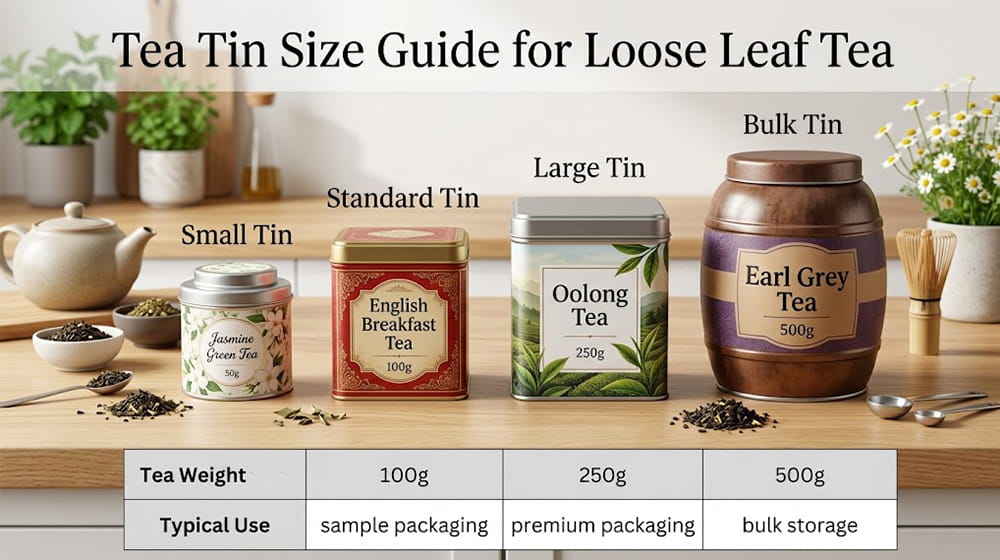
This is the question we hear most often:
"I want to package 100 grams of tea. What size tin do I need?"
The answer depends entirely on the tea.
Different teas have wildly different densities. If you choose your tea tin packaging based on weight alone, you risk crushing delicate leaves or leaving so much empty space that the tea rattles and breaks during shipping.
Here is a quick density reference:
| Tea Type | Leaf Density | Packaging Consideration |
| White Tea | Very Low | Needs larger container than expected |
| Green Tea | Medium | Standard tin size works well |
| Rolled Oolong | High | Fits in smaller container than expected |
| Black Tea | Medium-High | Standard tin size works well |
Always test your actual tea in sample tins before committing to production volumes.
Once you understand your tea's density, the following size guidelines can help you narrow down your options.
| Tea Weight | Suggested Tin Volume | Typical Use |
| 30–50 g | 150–200 ml | Sampling, trial packs |
| 80–100 g | 300–350 ml | Standard retail size |
| 150–250 g | 600–700 ml | Premium collections |
| 500 g+ | 1200 ml+ | Bulk wholesale |
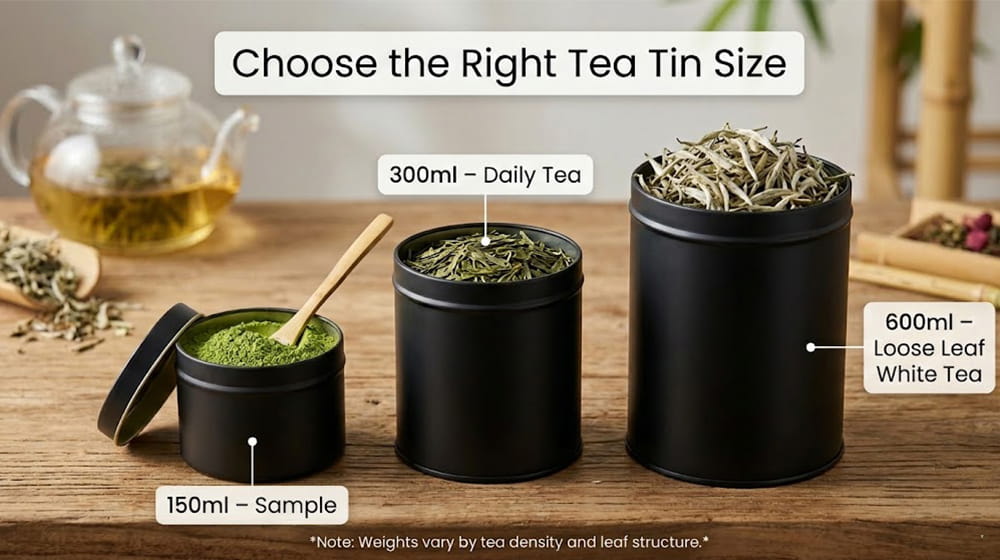
To make your decision even easier, here is a summary table that matches common tea types with recommended tea tin packaging specifications
| Tea Type | Recommended Tin Size | Recommended Lid Type | Why |
| Green Tea | 300 ml | Plug Lid | Protects delicate leaves from air exposure |
| Oolong Tea | 250 ml | Slip Lid | Dense leaves need less volume; standard seal sufficient |
| Matcha Powder | 100 ml | Gasket + Foil Seal | Maximum protection against moisture and oxidation |
| White Tea | 500 ml | Plug Lid | Fluffy needles need extra space to prevent crushing |
| Black Tea | 350 ml | Slip Lid | Standard density; economical seal works well |
| Herbal Blends | 400 ml | Plug Lid | Varies by ingredient; extra seal helps preserve complex aromas |
This table can serve as a quick reference when you are sourcing tea tin packaging for different products in your lineup.
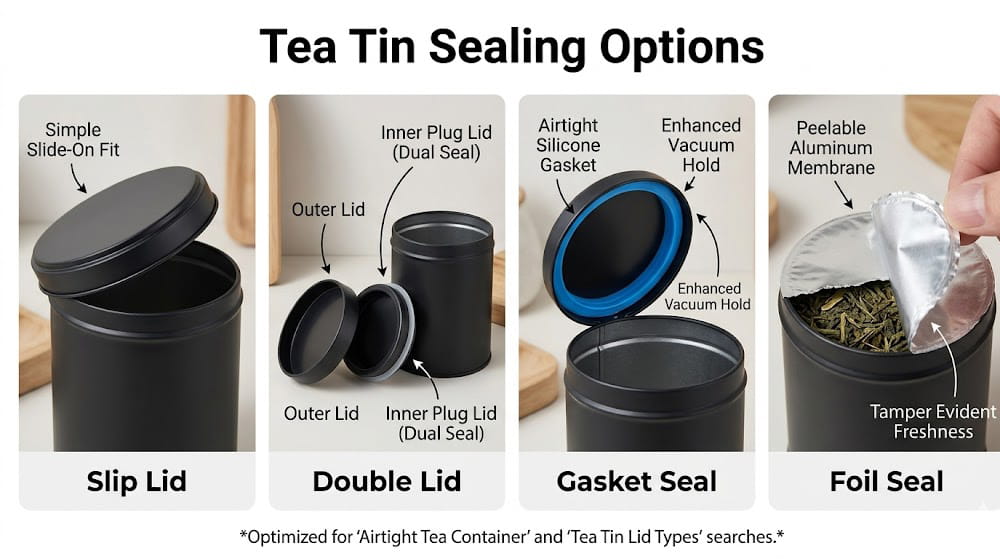
The seal is where many packaging conversations get technical. Different lid structures offer different levels of protection.
The most common and economical structure. The lid fits snugly over the base using friction. Suitable for everyday teas that will be used quickly.
An inner plug fits tightly into the opening, creating a better seal. An outer decorative lid covers the plug for a clean appearance. This design balances sealing performance with user convenience.
For teas that demand extra protection, some tins incorporate a silicone or PE gasket inside the lid. This creates a near-airtight environment. Recommended for moisture-sensitive teas like matcha or high-grade green teas.
For powdered teas, an additional foil seal under the lid provides maximum protection. It guarantees freshness until the customer opens the package.
Most tea tin packaging is made from tinplate—steel coated with a thin layer of tin. This combination offers three essential benefits:
Corrosion resistance protects the tea from metallic taste
Food-grade safety ensures compatibility with consumables
Printability allows high-quality decoration
Tinplate thickness affects performance:
| Thickness | Typical Application | Benefit |
| 0.18 mm | Small tins (under 100g) | Lightweight, lower cost |
| 0.23 mm | Standard containers | Good balance of strength and weight |
| 0.28 mm | Large tins, export shipping | Maximum dent resistance |
If you ship internationally, consider thicker materials. The small added cost is worth avoiding damaged goods
OOne of the biggest advantages of custom tea tins is the range of customization possibilities.
Tea tins accept full-color CMYK offset printing with excellent results. You can also specify:
Metallic inks for premium accents
Matte or gloss protective coatings
Spot UV for high-contrast details
Raising or recessing parts of your design creates a three-dimensional effect that catches both the eye and the touch. Particularly effective for logos and decorative patterns.
Standard shapes are the most economical route, but custom molds allow you to create truly distinctive tea tin packaging. Custom tooling requires upfront investment and is typically viable for medium to large production volumes.
Packaging costs vary based on several factors. Here is a rough guide:
| Feature | Cost Impact |
| Standard round tins | Lowest cost |
| Square or rectangular tins | Moderate increase |
| Embossing | Additional tooling fee |
| Metallic printing | Slight per-unit increase |
| Custom molds | High initial tooling |
For new brands: Starting with stock tin shapes and focusing on high-quality printing is a smart way to control costs while still achieving a premium look.
Metal tea tin packaging manufacturing typically requires minimum quantities
| Packaging Type | Typical MOQ |
| Stock tins | 500–1000 pcs |
| Custom printed | 5000 pcs |
| New mold development | 10,000+ pcs |
These numbers vary by factory but provide a realistic starting point for planning.
Beyond protection and appearance, good tea tin packaging is a pleasure to use. Consider these details:
These details contribute significantly to how customers perceive your brand.
Standard slip-lid tins are not completely airtight but provide good protection. For higher protection, choose tins with plug lids, gasket seals, or foil induction seals.
It depends on the tea. Rolled oolong may fit in 250–300ml, while fluffy white tea may need 400–500ml. Always test with your actual product.
Yes. Tinplate is widely recyclable through standard steel recycling programs.
Most tea tin packaging uses food-grade epoxy or polymer coatings to prevent corrosion and ensure food safety.
Yes. Many suppliers offer stock tins that can be customized with labels. This allows smaller minimums while you establish your market.
Choosing the right tea tin packaging involves balancing protection, presentation, and cost. The best approach is to test actual samples with your tea before committing to large production runs.
If you are exploring custom tea tin packaging and would like to discuss your specific requirements, we are here to help.
Contact Us to request samples, discuss sizing, or review printing options for your brand.
Get The Latest Information And Special Offers


 IPv6 network supported
 English
 Français
 Deutsch
 Español
 Português