
 English
 Français
 Deutsch
 Español
 Português
Reliable sourcing is no longer about comparing quotations alone. For cookie and biscuit brands, the more important question is whether a supplier can prove stable production control, consistent sample-to-bulk execution, and clear responsibility across materials, printing, forming, inspection, and delivery.
In recent sourcing cycles, many buyers have noticed the same pattern: quotes come back fast, but technical answers stay vague, sample approval does not fully match mass production, and lead times suddenly change after order confirmation. These issues usually point to one core problem — the supplier may not control the most critical parts of production.
That is why experienced buyers now verify manufacturing capability before they negotiate pricing in depth. They want to know whether they are working with a real cookie tin manufacturer, a factory-backed production team, or an intermediary coordinating multiple outside workshops. This distinction affects cost stability, quality consistency, tooling control, and delivery reliability.
Quick Summary
- Reliable cookie tin manufacturers demonstrate control over materials, printing, forming and inspection, including clear responsibility for any outsourced production stages.
- Traceable tinplate grades, thickness specifications and coating information help buyers understand quotation differences and evaluate whether material choices suit the packaging.
- Food-contact documentation should relate to the actual packaging and destination market; management-system certificates and social audits serve different purposes.
- Cookie tin experience is best assessed through relevant production examples, repeat-order records and technical explanations of lid fitting, printing and embossing limitations.
- Physical samples should confirm print sharpness, seam quality, lid fit, interior cleanliness, odour and embossing alignment before becoming the reference for bulk production.
- Comparable quotations identify tooling scope, material specifications, decoration, MOQ and delivery assumptions, with realistic time allowed for sampling and revisions.
- Written order specifications should record approved samples, tolerances, defect criteria, tooling ownership, protective packing and procedures for handling confirmed quality issues.
- For Jinyu projects, review shipment punctuality, batch consistency, documentation and corrective actions after delivery before confirming specifications and expectations for repeat orders.
Why factory verification matters before price comparison
A lower quoted price can look attractive at the inquiry stage, but it often hides risk if production responsibility is fragmented. When stamping, printing, forming, coating, or inspection are spread across different parties, even a small change in schedule or specification can create rework, variation, or delay.
What a real cookie tin manufacturer should be able to explain early
Before sampling starts, a factory-backed supplier should already be comfortable discussing the production details behind the product. That usually includes:
- tinplate thickness range and how it affects structure, cost, and durability;
- food-contact coating and documentation for relevant market requirements;
- printing limitations, embossing or debossing depth, and mold feasibility;
- sample timeline, revision logic, and how sample standards connect to mass production;
- peak-season capacity, line scheduling, and realistic lead-time planning.
If a supplier can only talk about artwork and price, but not about production logic, that is usually a sign that execution may depend on outside parties rather than direct factory control.
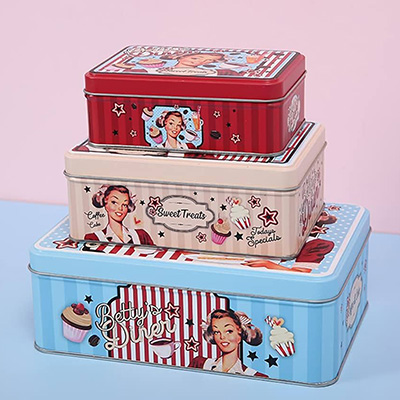
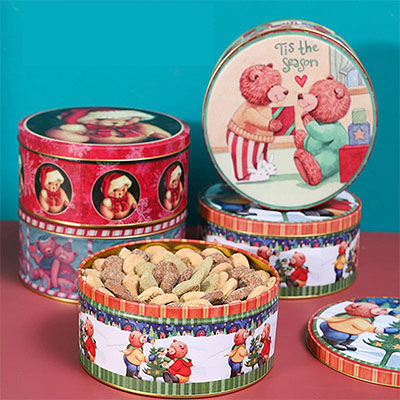
Factory-backed manufacturer vs. intermediary model
| Evaluation Item | Factory-Backed Manufacturer | Intermediary or Non-Factory Supplier |
|---|---|---|
| Production responsibility | Core processes are controlled or coordinated within a factory-led system | Work is often split between outside workshops with less direct control |
| Technical answers | Can explain material, coating, tooling, structure, and finishing constraints clearly | Answers may remain sales-oriented and less specific |
| Sampling consistency | Sample development usually follows the same logic used in bulk production | Higher risk of differences between approved sample and mass goods |
| MOQ and capacity explanation | MOQ and lead time are tied to tooling, line scheduling, and output planning | MOQ or timeline may change after inquiry because real capacity is not directly controlled |
| Reorder stability | More likely to keep structure, finish, and pricing logic stable over repeat orders | More likely to renegotiate or shift production routes later |
A practical screening checklist before RFQ
To reduce sourcing risk early, buyers should screen suppliers across several dimensions instead of relying on one signal only.
1. Certifications and compliance readiness
Audit reports and food-contact documentation still matter, but buyers increasingly request them earlier in the process rather than as a final formality. ISO management systems, social compliance records, and food-grade test documents are useful only when the supplier can provide them quickly and explain how they connect to actual production control.
2. Category experience and real production cases
Experience should be evaluated at the product-category level, not only at the company level. A supplier may be familiar with general tin boxes but still lack stable experience with biscuit or cookie tins, especially when printing precision, lid fitting, embossing alignment, or food-contact requirements are involved. Real customer cases, repeat-order history, and export references are stronger signals than general claims.
3. Traceable materials and specification transparency
Reliable suppliers should be able to disclose tinplate grade, thickness range, coating information, and at least the basic origin or testing route of their materials. If a quotation seems unusually low, buyers should check whether the reduction comes from thinner material, downgraded coating, weaker print protection, or reduced inspection standards.
4. Customization depth
Not all “custom cookie tin” offers mean the same thing. Some suppliers can only customize artwork, while others can support structure optimization, mold development, embossing, window details, specialty shapes, or surface-finish coordination in-house or under direct factory supervision. The more differentiated the packaging, the more important real technical ownership becomes.
5. Export and communication reliability
Suppliers with stable export experience usually communicate more effectively about documentation, shipping packaging, labeling expectations, acceptance timing, and destination-market requirements. Communication speed also matters. A responsive team that can answer clearly, follow up consistently, and flag risks early often indicates a more mature internal process.
What buyers should verify during quotation and sample approval
A strong quotation stage is not just about collecting numbers. It is the stage where buyers should convert assumptions into documented checkpoints.
- Send a clear RFQ with dimensions, structure, artwork direction, quantity, destination market, and requested trade terms.
- Ask for sample timing, revision timing, tooling scope, and whether the sample method reflects bulk production conditions.
- Review physical samples, not only images. Check print sharpness, seam flatness, lid fit, inside cleanliness, odor, embossing registration, and overall finish consistency.
- Confirm MOQ logic, monthly or seasonal capacity, and what happens during peak-season scheduling.
- Request cost transparency where possible, including tooling, unit price logic, printing or finishing add-ons, and shipping-related assumptions.
Physical sample review is especially important because many sourcing failures begin with an approved visual concept that was never fully verified as a manufacturable production standard.
What should be written into the order agreement
Once a supplier passes initial screening and sampling, buyers should shift from discussion to documentation. Reliable cooperation depends on what is written, not only what is promised.
- confirm detailed specifications, approved sample reference, tolerances, and finish requirements;
- define inspection standards, defect criteria, and acceptance method;
- state production timeline, shipment window, and responsibilities for delay communication;
- clarify tooling ownership, reorder rules, and any changes that may affect future pricing;
- set packaging protection, shipping method, and delivery acceptance process;
- include intellectual property and artwork protection clauses where custom branding is involved;
- record after-sales handling rules for confirmed quality issues.
Recommended buyer workflow from screening to repeat orders
| Procurement Stage | What to Verify | Why It Matters |
|---|---|---|
| Initial screening | Factory role, certifications, export experience, communication quality, customer cases | Helps filter out weak or unclear suppliers before time is spent on detailed development |
| Technical review | Material grade, thickness, coating, structure feasibility, printing and finishing limitations | Confirms whether the supplier can actually make the required package correctly |
| RFQ and sample stage | Quote logic, tooling scope, MOQ, capacity, sample accuracy, revision process | Reduces the gap between concept approval and bulk production reality |
| Contract and production | Specifications, QC rules, timelines, packaging, IP protection, escalation process | Turns operational expectations into enforceable working rules |
| Delivery and repeat order review | On-time shipment, batch consistency, reorder pricing, documentation quality, corrective actions | Determines whether the supplier is suitable for long-term sourcing rather than a one-off order |
Final takeaway for sourcing teams
Reliable cookie tin manufacturers are usually identified through evidence, not slogans. Serious buyers compare how suppliers answer technical questions, manage sample approval, explain materials, document agreements, and maintain consistency at scale. Price still matters, but price becomes meaningful only after the production model and execution reliability have been verified.
In practical terms: if a supplier can show real factory understanding, stable documentation, transparent sampling logic, workable lead-time planning, and disciplined follow-up after order confirmation, the sourcing risk drops significantly. That is what dependable cookie tin procurement looks like in today’s market.




 IPv6 network supported